
Mental Health and Wellbeing in the NDIS

Mental health and the NDIS intersect in ways that trip a lot of people up — including, often, the person trying to access support in the first place. The rules around eligibility can feel opaque, and the language the NDIS uses doesn’t always match the language a psychologist or psychiatrist might use. This guide sets out, plainly, how the two systems actually connect. What “psychosocial disability” actually means Psychosocial disability describes disability that arises from a mental health condition when that condition significantly and persistently affects a person’s daily functioning and social participation. It’s an important distinction: not everyone living with a mental health condition experiences psychosocial disability, and the NDIS assesses eligibility based on functional impact, not on the diagnosis itself. In practice, this means two people with the same diagnosis might have very different NDIS outcomes, depending on how significantly and permanently their condition affects their day-to-day functioning. What eligibility actually requires To access the NDIS on the basis of a psychosocial disability, evidence generally needs to show that the impairment is permanent, or likely to be permanent, and that it results in substantial functional impact. Appropriate treatment options need to have been explored first. This evidentiary bar is genuinely high, and it’s one of the more common reasons applications are delayed or knocked back — often because the supporting documentation doesn’t clearly link diagnosis to functional impact in the way the NDIA needs to see. What the NDIS actually funds — and what it doesn’t This is one of the most misunderstood parts of the system. The NDIS does not fund clinical mental health treatment — psychiatric care, psychological therapy for treatment purposes, or medication. Those remain the responsibility of the mainstream health system, through Medicare, public mental health services, or private treatment. What the NDIS does fund is support that builds capacity and enables participation, including: Because of this split, effective support almost always involves collaboration between NDIS-funded services and mainstream health providers — a GP, a psychiatrist, a treating psychologist — working alongside NDIS supports rather than being replaced by them. Recovery as an ongoing, individual process The NDIS’s approach to mental health support is meant to be built around recovery — not simply managing symptoms, but supporting a person’s own goals, strengths and sense of direction. What that looks like varies hugely from person to person, which is exactly why generic, one-size-fits-all support plans tend to fall short in this space. Why this matters for how support is delivered Mental health support that’s genuinely well integrated with physical and daily living support tends to produce better outcomes than mental health treated as a separate, siloed concern. At Wayfare Support, our nurse-led model means mental health considerations are built into care planning from the outset, alongside physical and daily living needs — rather than being an afterthought handled by whoever happens to notice a problem first. Where to start If you’re applying to the NDIS on the basis of a mental health condition, the single most useful thing you can do early is work closely with your treating clinician to make sure your documentation clearly addresses functional impact — not just diagnosis. A Support Coordinator or psychosocial recovery coach can also help translate clinical information into the language the NDIA is assessing against.
Carers Week: Supporting the People Who Support Others
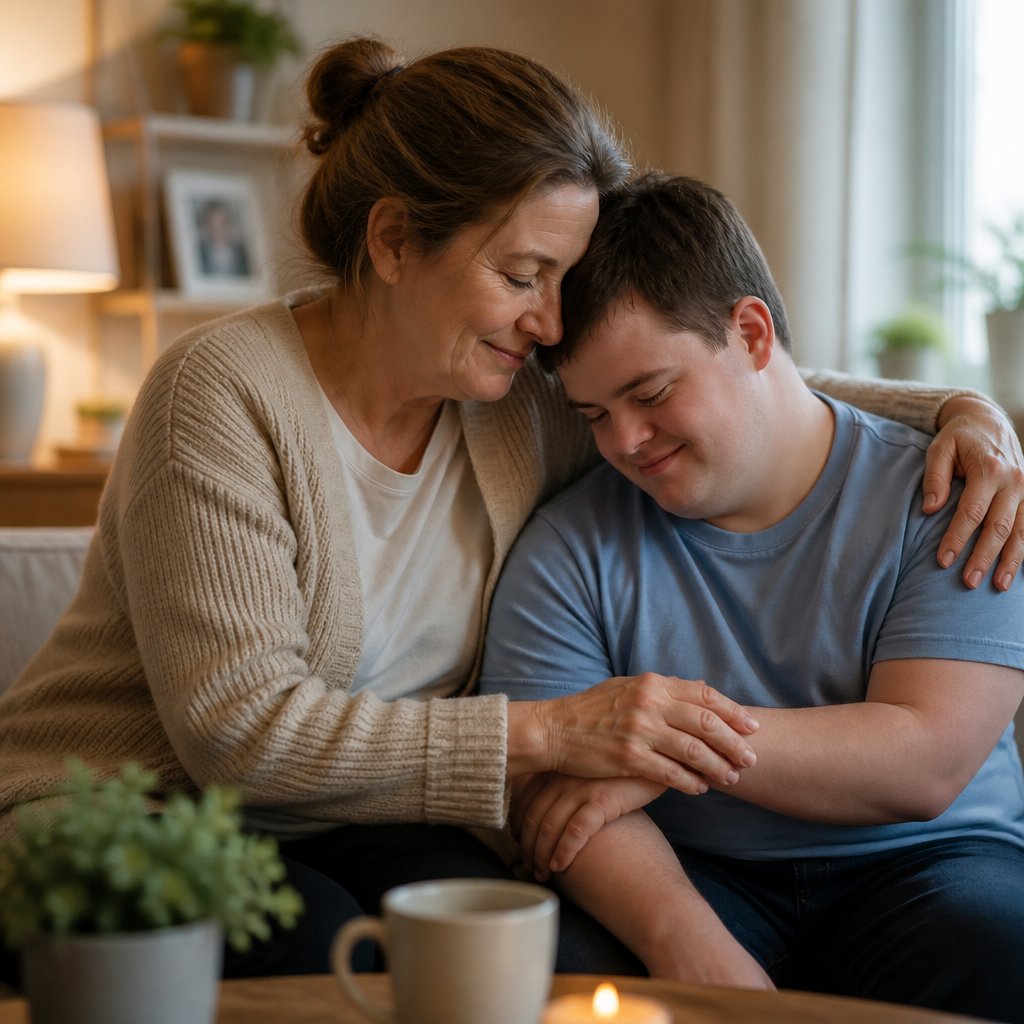
Every October, Carers Week rolls around, and for a lot of family carers, it lands somewhere a bit strange. It’s meant to be a moment of recognition — and it is, genuinely — but recognition can feel a little hollow when you’re also exhausted, behind on sleep, and haven’t had an uninterrupted conversation in weeks. So let’s talk about what Carers Week is actually for, and what real support looks like beyond a nice social media post. Who we’re actually talking about In Australia, the vast majority of disability support isn’t delivered by paid workers at all. It’s delivered by parents, partners, adult children, siblings, and friends — often without any formal training, often alongside a full-time job, often for years or decades. Carers Week exists because this enormous, largely invisible workforce rarely gets acknowledged, let alone properly supported. If you’re one of these people, this week is for you. Even if it doesn’t always feel like it. The exhaustion that’s hard to explain There’s a particular kind of tiredness that comes from caring for someone you love, that’s different from ordinary tiredness. It’s not just physical. It’s the constant background vigilance — always half-listening for a call, always mentally tracking medications and appointments and moods, rarely able to fully switch off even when you’re technically “off duty.” A lot of carers don’t talk about this much, because it can feel disloyal, or like complaining about someone you’d do anything for. It isn’t. Naming how hard something is doesn’t take anything away from how much you love the person you’re doing it for. Why rest isn’t selfish This is worth saying plainly: taking a break from caring is not abandoning the person you care for. It’s what makes it possible to keep caring for them well, for longer. Carers who never get a break tend to burn out — and burnout doesn’t just affect the carer, it affects the quality and safety of the care itself. If you’ve been putting off organising respite because it feels like giving something up, it might help to reframe it. It’s not giving something up. It’s maintenance, the same way you’d get a car serviced so it doesn’t break down on the highway. Practical things worth knowing about this week What we’d say to carers, plainly You don’t need a special week to deserve support, but if this one gives you a nudge to actually ask for some, take it. Whether that’s a proper conversation with your GP about how you’re coping, a call to Carer Gateway, or simply raising the idea of respite with your family’s support coordinator — this week is as good a time as any to stop putting yourself last on the list.
Building Trust From Day One

There’s a particular kind of nervousness that shows up on someone’s face the first time a new support worker walks through their door. It doesn’t matter how many times it’s happened before — a new person, a new voice, a new set of hands helping with something personal. It’s a big deal, and it deserves to be treated like one. A lot gets written about NDIS compliance, worker screening, and training checklists — and all of that matters. But almost nobody talks about the quieter thing that actually determines whether a support relationship works: what happens in that first hour. Trust isn’t a form you sign You can tick every box on an intake checklist — qualifications verified, police check clear, induction complete — and still send someone into a participant’s home who doesn’t quite know how to be there. Paperwork tells you a worker is safe. It doesn’t tell you whether they’re any good at the actual moment of meeting someone new, on that person’s own turf, often at a vulnerable time. That’s the gap good onboarding is meant to close. It starts before the worker ever arrives The best introductions we’ve seen don’t start with a knock on the door. They start with the worker actually reading the person’s file properly — not skimming it in the car outside — and knowing the small things that make a difference. How the person likes to be addressed. Whether they prefer things explained step by step or just done. What a bad day looks like for them, and what helps. It sounds obvious. It’s astonishing how often it doesn’t happen. The first visit should feel unhurried If a worker’s first shift is treated exactly like their fiftieth — straight into tasks, clock ticking — something’s been lost. A good first visit leaves room for the participant to ask their own questions, set their own pace, and simply get used to having this new person around before anything clinical or task-based even starts. We ask our own support workers to treat that first shift as an introduction, not a job to get through. If it takes a little longer because someone wants to chat, show you their garden, or just sit with you for ten minutes before getting started — that’s not wasted time. That’s the relationship being built. The family or the participant should never be the ones explaining everything One of the fastest ways to break trust is turning up under-prepared and asking the participant or their family to fill in all the gaps — again. People get tired of repeating their own story. A worker who’s done their homework, and who says so plainly (“I’ve read through your file, I know you prefer things done this way, tell me if I’ve got anything wrong”), immediately signals something important: that this isn’t going to be another exhausting introduction. The shadow shift matters more than it gets credit for Most NDIS providers, including us, require new workers to complete at least one shadow or buddy shift with someone experienced before working solo. It’s easy to treat this as a box-ticking step. Done properly, it’s actually where a lot of the real handover happens — not just of tasks, but of tone. How does this experienced worker talk to the participant? What’s the unspoken rhythm of the household? A rushed shadow shift teaches none of that. Consistency is the follow-through on trust Even a great first introduction gets undone if the next visit is a completely different person, and the one after that too. Trust that’s built carefully in week one needs to be protected by some continuity afterward — the same face, or a small, familiar team, rather than a constant rotation of strangers. This is one of the quieter reasons staff turnover matters so much in this sector: every departure isn’t just an HR statistic, it’s a relationship someone has to rebuild from scratch. What this looks like for families choosing a provider If you’re comparing providers, it’s worth asking directly how they handle a participant’s first meeting with a new worker. Is there a shadow shift? Is the file actually read beforehand, or handed over as an afterthought? Is there a plan for keeping the same worker involved over time, rather than whoever happens to be free that week? The answers tell you a lot more than a glossy brochure ever will.
Exploring the World Without Limits

Travel with a disability takes more planning than most trips — but it shouldn’t be out of reach, and for a lot of participants, it’s an important part of the community participation and independence goals written into their NDIS plan. With the right preparation, it can be genuinely rewarding rather than something to dread. Start with genuine research, not assumptions Before booking anything, look into your destination’s actual accessibility features rather than assuming. Tourism Australia’s accessible travel guide is a genuinely useful starting point for accessible attractions, accommodation and transport within Australia. Booking accommodation with confidence Listed “accessible” rooms vary enormously in practice, so it’s worth confirming details directly with the property rather than relying on a website badge alone — ask specifically about entrance width, roll-in showers, and lift access if you’re above ground level. Specialist platforms like Wheel the World and Accessible Accommodation list properties specifically vetted for various accessibility needs, which can save a lot of back-and-forth. Getting there: air and ground transport Australian airlines are required under the Disability Discrimination Act to provide reasonable assistance, including boarding support and careful handling of mobility aids — but this works far better when airlines are notified well in advance, not at check-in. Label mobility equipment clearly and provide written handling instructions where possible, particularly for powered wheelchairs. For ground transport, Queensland participants may be eligible for the Taxi Subsidy Scheme, which reduces the cost of accessible taxi travel for people who can’t use standard public transport — worth checking with your Support Coordinator if you haven’t looked into it. A Companion Card may also apply for a support person’s entry to venues and events. Packing: the essentials people forget under pressure At the airport If standard security screening isn’t suitable for you, you can request an alternative process — communicating this clearly to security staff in advance makes the process smoother for everyone involved. While you’re there Prioritise attractions and activities with confirmed accessibility rather than assuming, and take time to understand local public transport accessibility before relying on it. Being willing to adjust plans on the day — rather than treating a rigid itinerary as fixed — tends to make the whole trip less stressful. Travel Without Limits, Australia’s disability-specific travel publication, is a genuinely good source of first-hand tips and destination inspiration from other travellers navigating the same questions. How this connects to your NDIS plan Travel and holidays themselves generally aren’t funded by the NDIS, but the community participation and support elements that make travel possible often are — assistance from a support worker, for instance, where that support is already part of your plan. If travel is genuinely important to your goals, it’s worth raising directly with your Support Coordinator well ahead of your next plan review, rather than assuming it’s off the table.
Understanding the NDIS

The National Disability Insurance Scheme can feel like learning a new language the first time you sit down with a plan document. Terms like “core supports” and “capacity building” get thrown around as though everyone already knows what they mean — and if you’re new to it, that can be genuinely overwhelming. This guide breaks the NDIS down in plain language, so you can walk into your next planning meeting, or your next conversation with a provider, feeling a bit more confident about what you’re actually looking at. What the NDIS is actually for At its core, the NDIS provides individualised funding to Australians with permanent and significant disability, aimed at building independence and enabling fuller participation in everyday community life. It isn’t a one-size-fits-all payment — every plan is built around a specific person’s goals, needs and circumstances. The three support categories, explained simply Core Supports — these cover the everyday things: assistance with personal care, help with daily household tasks, transport to appointments or activities, and consumables like continence products. This is usually the largest and most flexible part of a plan. Capacity Building Supports — these are aimed at building skills and independence over time, rather than just meeting a need today. Think therapy sessions, skill-building programs, or support coordination that helps you manage your plan more independently. Capital Supports — this category funds larger, one-off items — assistive technology like a customised wheelchair, or home modifications such as a bathroom upgrade to improve accessibility and safety. Understanding which category a support sits under matters, because it affects how flexibly the funding can be used and what you need to demonstrate to access it. Why a Support Coordinator can make a real difference Many participants and families find the early months of managing a plan the hardest part — working out which providers to approach, how to read the funding breakdown, and how to make sure supports actually line up with stated goals. A Support Coordinator can genuinely change this experience. Their role is to help you understand your plan, connect you with the right services, and gradually build your own confidence and capacity to manage things independently over time. Practical tips for navigating your plan What this looks like day to day For families in Brisbane and South-East Queensland, this often means coordinating between a handful of people at once — support workers, allied health professionals, sometimes a nurse, and a support coordinator — all working from the same plan. When that coordination works well, it’s largely invisible: appointments happen, supports show up, and the person at the centre of it all gets to focus on their goals rather than the admin behind them. When it doesn’t work well, it’s exhausting, and it’s usually the family carrying the extra load. This is part of why we built Wayfare Support around clinical oversight from the outset — so that when a participant’s needs involve any degree of medical complexity, there’s a Registered Nurse already embedded in the picture, not someone you have to go looking for separately. You’re not meant to figure this out alone If you’re just starting your NDIS journey, or you’ve been in the system for a while but still find parts of it confusing, that’s genuinely normal — not a sign you’re missing something everyone else understands. Ask questions. Push back when something doesn’t make sense. Take it one plan review at a time.
Cultural Safety in Disability Support

Cultural safety gets used as a phrase in a lot of provider marketing, including, at times, our own. It’s easy to write on a website. It’s much harder to actually practise, consistently, in someone’s home or in a clinical setting, especially when nobody’s watching. So we wanted to write something a bit more honest about what this actually means in practice — not the policy version, the real one. It’s not the same as being polite Being friendly and respectful to someone from a different cultural background is a good start, but it isn’t the same thing as cultural safety. Cultural safety is about whether the person receiving support feels genuinely safe to be fully themselves — their language, their beliefs, their way of doing things — without having to quietly translate themselves into something more palatable for the worker in front of them. A useful way to think about it: cultural safety isn’t defined by the provider. It’s defined by whether the participant feels safe. Those aren’t always the same judgement. What it actually looks like, day to day For a First Nations participant, this might mean a support worker who understands that eye contact, silence, or directness can carry very different meaning than in mainstream Western interactions, and who doesn’t misread these as disengagement or rudeness. It might mean recognising the ongoing impact of intergenerational trauma on how someone engages with formal services, including disability services, and not requiring someone to over-explain their own history to be believed. For someone from a culturally and linguistically diverse background, it might mean actually arranging a qualified interpreter, rather than relying on a family member — including a child — to translate medical or personal information they shouldn’t have to carry. It might mean understanding that in some households, decisions genuinely are made collectively by the family, and that treating the individual participant as the sole decision-maker, while well-intentioned, can actually misread the situation. For LGBTQIA+ participants, it might mean a worker who uses someone’s correct name and pronouns without being reminded twice, and who doesn’t make assumptions about a person’s relationships or family structure based on outdated defaults. Where it tends to go wrong Cultural safety training is often delivered once, early in someone’s employment, and then never revisited. It becomes a certificate on file rather than a living practice. The other common failure is treating culture as a fixed checklist — “this is what people from this background need” — when in reality, culture, faith, and identity are deeply individual, and two people from the same background can want very different things. The safest approach we know of is also the simplest: ask, rather than assume. And keep asking, because needs and comfort levels can shift over time. Why this matters clinically, not just ethically This isn’t only a matter of respect, though that would be reason enough. Participants who don’t feel culturally safe are less likely to disclose important information — pain, symptoms, family concerns, safety issues — because disclosure requires trust. A worker who’s inadvertently created distance through cultural misunderstanding may be missing information that actually matters for someone’s health and safety. What to ask a provider about this, honestly If cultural safety matters to you or the person you’re supporting, it’s worth asking a provider some direct questions: Is cultural competency training ongoing, or a one-off induction module? Do they use qualified interpreters, and who pays for that? Do they actively recruit bilingual or culturally matched staff where it’s wanted, or is that left to chance? A provider that’s done real work here will have specific answers, not just reassurances.
Innovative Therapies Funded by the NDIS

The NDIS has moved well beyond funding only the traditional trio of occupational therapy, speech therapy and physiotherapy. A much broader range of evidence-based therapies can now be included in a plan, provided they’re clearly linked to a participant’s goals. At the same time, the scheme has become considerably stricter about what doesn’t qualify — so it’s worth understanding both sides clearly. The test that decides everything: “reasonable and necessary” Before looking at specific therapies, it helps to understand the underlying rule. Any support funded by the NDIS must be reasonable and necessary — meaning it relates to your disability, helps you pursue your goals, represents value for money, and is based on good evidence of effectiveness. This single test is what separates funded therapies from the growing list of exclusions. Creative therapies Art Therapy — supports emotional expression and processing, particularly useful for people who find it difficult to communicate feelings verbally. Music Therapy — uses the therapeutic properties of music to work on physical, emotional, cognitive and social goals, and can support motor skills and communication. Dance and Movement Therapy — uses movement to support emotional, social, cognitive and physical integration, and can be particularly valuable for participants with limited verbal communication. Psychological and cognitive therapies Cognitive Behavioural Therapy (CBT) — a well-established, evidence-based approach to identifying and shifting unhelpful thought and behaviour patterns, commonly used for anxiety, depression and PTSD. Dialectical Behaviour Therapy (DBT) — combines CBT with mindfulness, distress tolerance and acceptance strategies, often used for mood regulation and intense emotional experiences. Mindfulness-Based Therapies — build awareness of thoughts and feelings to support emotional regulation and reduce stress. Animal-assisted therapy — where the line actually sits This is one of the areas people most commonly get wrong, so it’s worth being precise. Equine-assisted therapy, delivered by a qualified allied health professional and aligned to specific therapeutic goals, can be funded — it’s genuinely used to support balance, coordination and emotional regulation. However, general “animal therapy” — informal interaction with pets, puppy therapy sessions or similar — is explicitly excluded, regardless of the benefit a participant might get from it. Assistance animals, like guide dogs, sit in a separate funding category again, with their own strict eligibility criteria. The distinguishing factor is always the same: is it delivered as therapy, by a qualified professional, toward a specific goal — or is it a pleasant, informal activity? Only the former is fundable. Assistive technology as therapy The NDIS recognises assistive technology’s role in supporting therapeutic goals, funding devices and equipment such as communication aids, mobility devices and sensory equipment that enable participation in therapy and daily life. Holistic and allied health therapies Occupational Therapy — helps develop, recover or maintain daily living and work skills, often by adapting the environment around the person rather than just working on the person alone. Speech Therapy — supports communication and swallowing needs, helping participants express themselves and interact socially. Nutritional/Dietetic Support — dietitian-led guidance to support overall health and manage specific conditions. What’s explicitly not funded — and this list has grown Following updates to the NDIS’s official supports list, a range of alternative and complementary therapies are explicitly excluded because they’re considered wellness or lifestyle choices rather than evidence-based disability interventions. This includes reiki and other energy healing practices, crystal or sound therapy, cuddle therapy, reflexology, aromatherapy, yoga and wilderness therapy, and general (non-clinical) animal therapy. Life coaching, hypnotherapy and similar wellness-coaching services are also excluded. This isn’t a judgement on whether these things can be enjoyable or personally meaningful — simply that they fall outside what the scheme is designed to fund. Getting a therapy included in your plan To access any therapy through the NDIS, you’ll generally need documentation from a treating health professional that clearly links the therapy to your specific goals and functional needs — not just a general statement that it might help. Working closely with your allied health team when preparing for a plan review makes this process considerably smoother.
Questions to Ask Your Support Coordinator About the 2026 NDIS Changes

If you’ve glanced at the news this month, you’ve probably seen the headlines. Billions being cut. Eligibility tightening. Children being moved onto different systems. It’s the kind of coverage that’s designed to grab attention, and for a lot of families, it’s landed somewhere between confusing and genuinely frightening. Here’s the thing though — most of what’s being reported right now is still moving through parliament. Some of it will change before it’s finalised. Some of it won’t affect your plan for years, if at all. And almost none of the news coverage is going to tell you what it actually means for ‘your’ situation, because it can’t. Only someone who knows your plan can do that. That’s what your support coordinator is for. So instead of doom-scrolling, here’s a better use of ten minutes: get them on the phone and ask them these questions directly. Start with the basics — has anything actually changed for me yet? It sounds almost too simple, but it’s the first thing to nail down. A lot of what’s in the news is proposed, or has passed but hasn’t been implemented, or applies to new participants rather than existing plans. Ask your coordinator plainly: as of today, has anything in my plan actually changed? If the answer is no, that’s genuinely useful to know — it takes some of the urgency out of the panic. What parts of the reform actually apply to me? The 2026 changes aren’t one single thing happening to everyone at once. There’s new planning processes, changes to how eligibility gets assessed, and separate work happening on home and living supports. Some of it is aimed squarely at early childhood supports. Some of it won’t touch adults with existing plans for a long while yet. Ask your coordinator to walk you through which specific pieces are relevant to your circumstances — not the whole reform package, just your slice of it. When is my next plan review, and could it be affected? This is probably the single most practical question you can ask. Reviews are where changes tend to actually land. If your review is coming up in the next six to twelve months, it’s worth understanding now — not the week before — whether anything about the process, the criteria, or the paperwork is likely to be different. If my funding does change, what happens to my current supports? Nobody can promise you nothing will change. But a good coordinator can tell you what the transition process looks like if it does — whether there’s a grace period, whether existing supports continue while a new plan is worked out, and who you’d talk to if something feels wrong or rushed. Where are you actually getting your information from? This one matters more than people realise. There’s a lot of secondhand information circulating right now — some accurate, some outdated, some just wrong. Ask your coordinator whether they’re working from the NDIS’s own published updates, from their organisation’s compliance team, or from general news coverage like everyone else. It’s a fair question, and a good coordinator won’t be offended by it. Is there anything I should be doing right now, or is this a “wait and see” situation? Sometimes the honest answer is that there’s genuinely nothing to do yet — and that’s worth hearing directly, rather than assuming you should be taking action out of anxiety. Other times there might be something small and sensible, like getting a report updated or a diagnosis re-confirmed, that’s worth doing sooner rather than later. Ask them to be specific. Who do I contact if this year’s changes affect my child’s early supports? If you have a young child accessing early intervention, this is worth asking about directly, because some of what’s being discussed involves shifting particular supports for younger children toward state-based systems over the next couple of years. The details are still being worked through, and timelines differ by state. Your coordinator should be able to tell you what’s confirmed for your situation and what’s still genuinely undecided. Can you put anything important in writing? A phone call is useful, but verbal reassurance has a way of getting fuzzy in memory a few weeks later. If your coordinator tells you something significant — a review date, a change to your plan, next steps you need to take — it’s completely reasonable to ask for a short email summarising it. Most coordinators are used to this and won’t mind at all. A word on all this, from us We’re not going to pretend we have a crystal ball on how the reform bill will finally look, because nobody does yet . What we can tell you is that we’re watching it closely, we’ll keep our own participants properly informed as things firm up, and we’d rather you ask us a question directly than sit with it unanswered because you didn’t want to bother anyone. If you don’t currently have a support coordinator, or you’re not confident yours is across the detail, that’s also a completely reasonable thing to raise with us.
Respite Care, Explained

There’s a moment a lot of family carers eventually reach, and it usually comes with a fair amount of guilt attached: the realisation that they need a break. Not want — need. And almost immediately, the second thought arrives close behind it: but is that fair to ask for? It is. Fully, completely, without qualification. Let’s talk about what respite actually is, and why needing it isn’t a failure of love or commitment. What respite actually means Respite is simply short-term support that allows the person you care for to be safely looked after by someone else, for anywhere from a few hours to a few weeks, so you get a genuine break. It comes in more forms than most people realise: Why the guilt shows up, and why it’s misleading Carer guilt tends to come from a good place — it usually means you care deeply and take the responsibility seriously. But it can lead to a distorted idea that needing rest means you’re not coping, or not committed enough, or that a “real” carer wouldn’t need a break. The evidence, and honestly just common sense, says the opposite. Carers who get regular breaks tend to sustain caring roles for longer, with better mental health, and with more patience and presence during the time they do spend caring. Respite isn’t time away from caring. It’s part of what makes good caring possible over the long run. It’s often already funded — many families just don’t ask If the person you care for has an NDIS plan, respite-related supports may already be available, whether as short-term accommodation, in-home support hours, or informal supports category funding, depending on how the plan is structured. A lot of families simply don’t realise this is on the table until they ask directly, because it’s not always spelled out clearly in the plan itself. If NDIS funding isn’t available or isn’t enough, some state and community-based respite programs operate independently of the NDIS, and Carer Gateway can help identify what else exists in your area. Starting small, if the idea feels overwhelming You don’t have to leap straight to a week away to make respite worthwhile. A few hours a fortnight, used consistently, can make a real difference — enough time for a proper coffee with a friend, an appointment of your own you’ve been putting off, or simply an afternoon nap without one ear listening out. Respite doesn’t have to be dramatic to be meaningful. What to say if someone questions it Occasionally, carers get pushback — from extended family, or from their own inner voice — questioning why they need a break “when it’s not that bad.” It’s worth having a simple answer ready, even if it’s just for yourself: caring well, for a long time, requires looking after the carer too. That’s not an opinion. It’s how sustainable care actually works.