
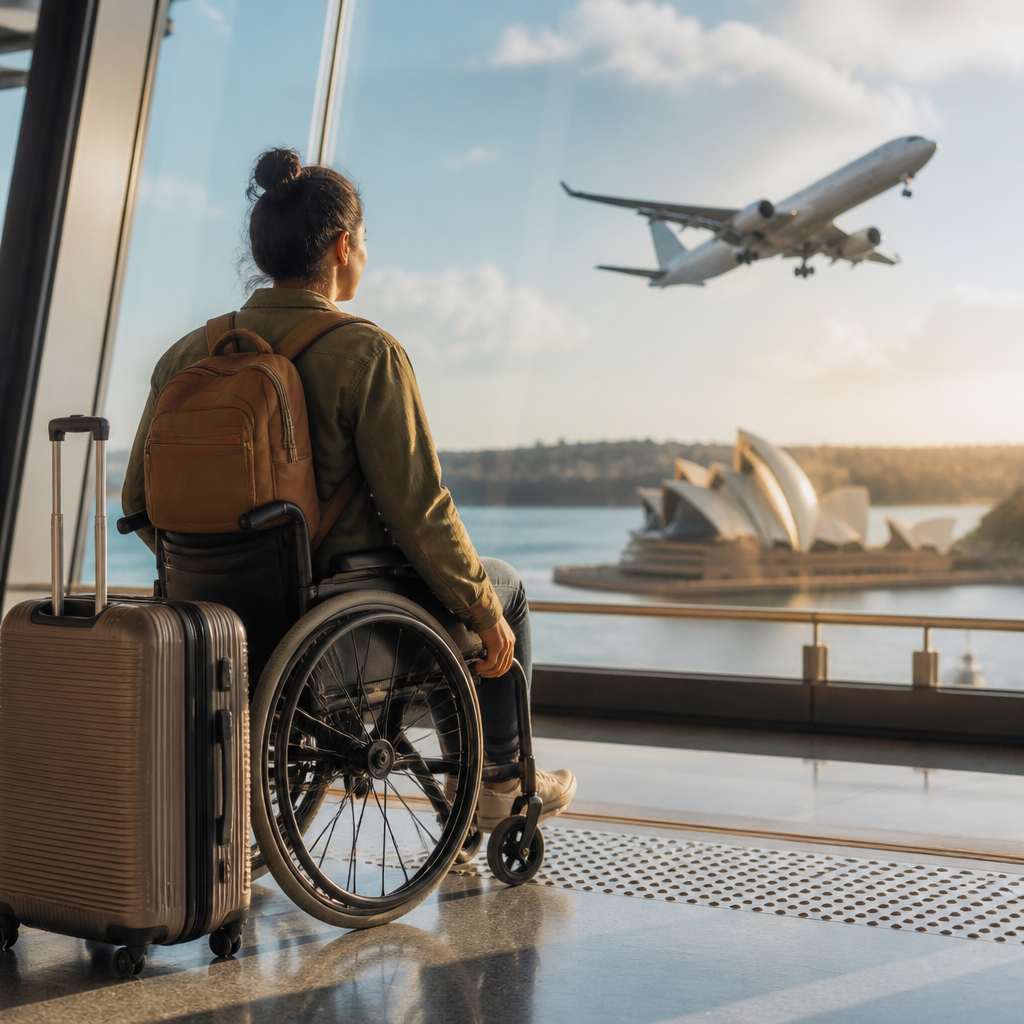
Travel with a disability takes more planning than most trips — but it shouldn’t be out of reach, and for a lot of participants, it’s an important part of the community participation and independence goals written into their NDIS plan. With the right preparation, it can be genuinely rewarding rather than something to dread.
Start with genuine research, not assumptions
Before booking anything, look into your destination’s actual accessibility features rather than assuming. Tourism Australia’s accessible travel guide is a genuinely useful starting point for accessible attractions, accommodation and transport within Australia.
Booking accommodation with confidence
Listed “accessible” rooms vary enormously in practice, so it’s worth confirming details directly with the property rather than relying on a website badge alone — ask specifically about entrance width, roll-in showers, and lift access if you’re above ground level.
Specialist platforms like Wheel the World and Accessible Accommodation list properties specifically vetted for various accessibility needs, which can save a lot of back-and-forth.
Getting there: air and ground transport
Australian airlines are required under the Disability Discrimination Act to provide reasonable assistance, including boarding support and careful handling of mobility aids — but this works far better when airlines are notified well in advance, not at check-in. Label mobility equipment clearly and provide written handling instructions where possible, particularly for powered wheelchairs.
For ground transport, Queensland participants may be eligible for the Taxi Subsidy Scheme, which reduces the cost of accessible taxi travel for people who can’t use standard public transport — worth checking with your Support Coordinator if you haven’t looked into it. A Companion Card may also apply for a support person’s entry to venues and events.
Packing: the essentials people forget under pressure
- Carry an ample supply of medications, plus prescriptions and a letter from your doctor outlining your condition and treatment, in case you need to explain or replace something while away.
- Check mobility aids are in good working order before departure, and pack chargers, spare parts or repair kits relevant to your equipment.
- Take out travel insurance that explicitly covers medical needs and equipment loss or damage — and disclose your relevant medical information upfront to avoid claim disputes later.
- Keep a written list of emergency contacts, including healthcare providers, readily accessible — not just saved in a phone that might run out of battery.
At the airport
If standard security screening isn’t suitable for you, you can request an alternative process — communicating this clearly to security staff in advance makes the process smoother for everyone involved.
While you’re there
Prioritise attractions and activities with confirmed accessibility rather than assuming, and take time to understand local public transport accessibility before relying on it. Being willing to adjust plans on the day — rather than treating a rigid itinerary as fixed — tends to make the whole trip less stressful.
Travel Without Limits, Australia’s disability-specific travel publication, is a genuinely good source of first-hand tips and destination inspiration from other travellers navigating the same questions.
How this connects to your NDIS plan
Travel and holidays themselves generally aren’t funded by the NDIS, but the community participation and support elements that make travel possible often are — assistance from a support worker, for instance, where that support is already part of your plan. If travel is genuinely important to your goals, it’s worth raising directly with your Support Coordinator well ahead of your next plan review, rather than assuming it’s off the table.